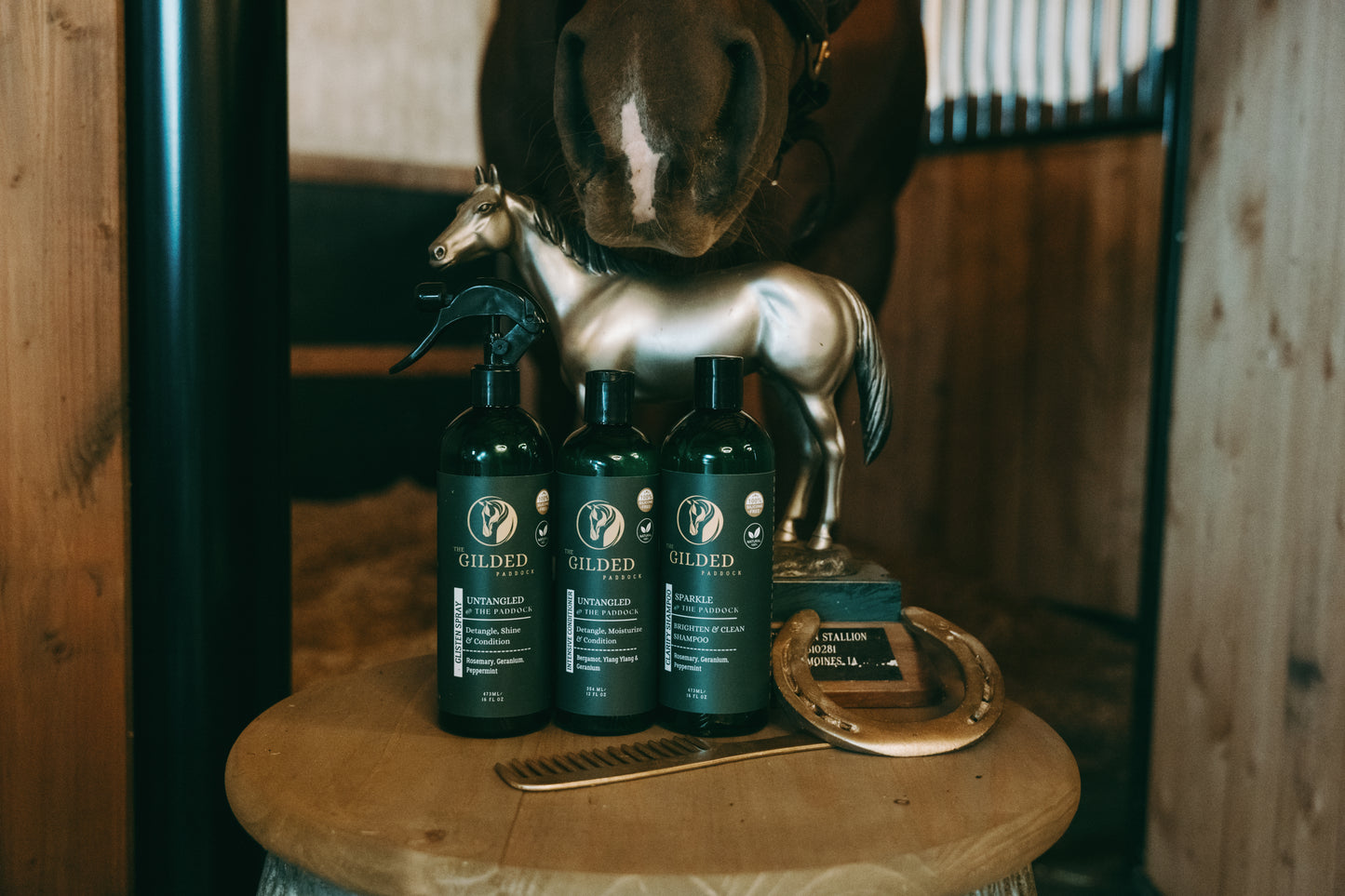
The Routine Behind Beautiful Horse Hair.
A simple approach to softer, shinier, easier-to-manage coats, manes & tails.

What If We Cared for Horse Hair Differently?
Traditional grooming often focuses on solving the problem we can see. The Equine Haircare Method™ takes a more complete approach: caring for the hair through better ingredients, thoughtful formulation and a routine designed to work together.
Traditional Grooming
The Equine Haircare Method™
Because beautiful horse hair deserves more than a quick fix.
A Better Routine, Step by Step.
Beautiful horse hair isn't about adding more product. It's about caring for the hair in the right order.
Cleanse
Remove dirt, sweat and product buildup for a clean foundation.
Restore
Bring moisture, softness and manageability back to the hair and skin.
Untangle + Shine
Reduce friction and tangles while enhancing natural-looking shine.
Maintain
Keep hair conditioned, manageable and beautiful between baths.
It's a better routine.
A Better Standard for Horse Grooming.
Modern haircare principles. Thoughtfully selected ingredients. Beautiful results designed for life in the barn.
Haircare Inspired
Created by a Certified Organic Haircare Formulator using modern haircare principles adapted for horses.
Ingredient Transparency
Every ingredient disclosed, with no hidden fragrance blends or mystery formulas.
Trusted in the Barn
Chosen by riders, trainers and veterinary professionals who care about both performance and thoughtful formulation.
Silicone Free
No heavy silicone coatings or artificial slip — just thoughtful conditioning and natural-looking shine.
Sulfate Free
Gentle cleansing without relying on harsh sulfate detergents that can leave hair feeling stripped.
Refillable Options
More product, less packaging and practical refill options designed with real barn life in mind.

MEET THE FOUNDER
For years, I couldn't understand why we accepted lower standards for horse grooming than we do for our own hair.
As a horsewoman and Certified Organic Haircare Formulator, I knew there had to be a better approach. The Equine Haircare Method™ was created to bring modern haircare principles into horse grooming through proper cleansing, conditioning, hydration, and maintenance.
Because healthy hair tangles less, breaks less, feels soft and shines naturally.
— Annie Haugland
How to Follow the Method

🧼 Step 1
Cleanse
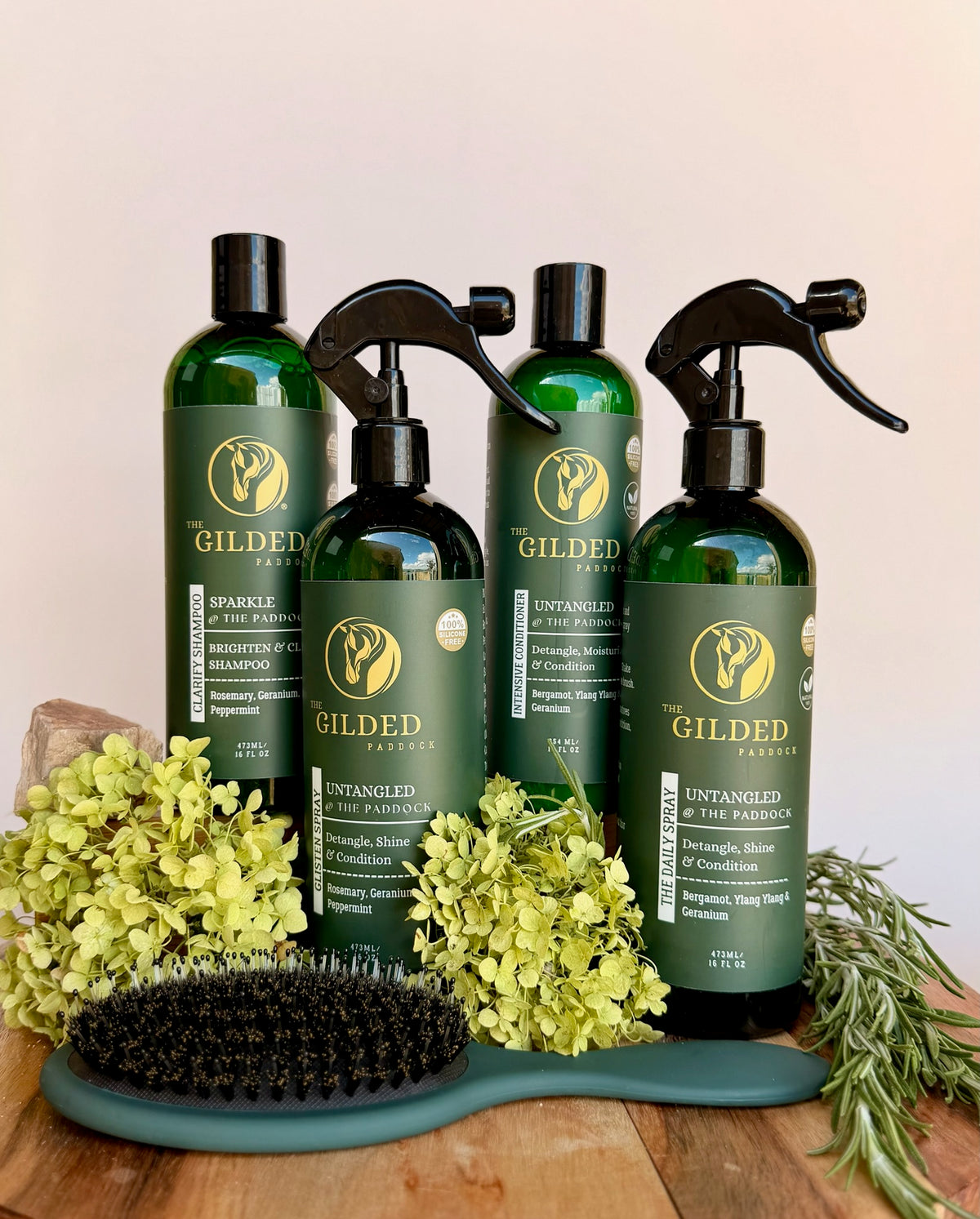
Clarify Shampoo
Healthy hair starts with a clean foundation.
Sweat, dirt, hard water minerals, fly spray, and grooming product residue can accumulate on the hair and skin over time, leaving the coat, mane and tail dull, dry, and difficult to manage.
Just as many people periodically use a clarifying shampoo to reset their hair, horses can benefit from a deeper cleanse as well. A gentle, sulfate-free clarifying shampoo helps remove buildup without relying on harsh detergents, preparing the hair for conditioning, untangling, and ongoing care.
A clarifying shampoo acts as a reset. Often improving the effectiveness of the products that follow, making it an essential first step in the Equine Haircare Method™.

🌿 Step 2
Restore
Intensive Conditioner
Restoring moisture helps improve softness, manageability, and overall hair health while reducing dryness and brittleness.
Healthy hair starts at the skin. Paying attention to the tail dock and mane base during grooming helps support the environment where new hair growth originates, making this step about more than just the visible hair itself. Apply Intensive Conditioner to washed mane & tail for extra moisturization.

✨ Step 3
Untangle & Shine
Glisten
No heavy silicone coatings. Just healthy-looking shine and manageability.
Brushing through tangles is one of the most common causes of breakage. When untangling, the key is to reduce friction, allowing knots to release more easily while minimizing damage during grooming. Spray GLISTEN and work in sections, twist the hair, then begin brushing from the bottom upward.
This step helps support softness, manageability, and shine. For coat, mane, and tail, try our Hot Cloth Method: mist Glisten onto the hair and follow with a warm, wet towel. Inspired by traditional hot oil treatments, this technique can be used on the mane & tail to smooth the hair, enhance shine, and create a polished finish without relying on silicones. Added benefit, it reduces dirt accumulation (especially helpful for light colored horses).

💧 Step 4
Maintain
The Daily Spray & Cleansed Waterless Shampoo
A lightweight conditioning mist designed to help support hair health between washes.
Perfect for daily grooming and maintaining softness and shine.
Healthy hair is built through consistency, not occasional treatments. Regular maintenance between baths helps keep the coat, mane, and tail cleaner, easier to manage, and less prone to tangles and breakage. The Daily Spray helps refresh and condition the coat while supporting softness and shine, while Cleansed Waterless Shampoo provides a convenient option for touch-up cleaning when a full bath isn't needed. Combined with routine grooming and attention to the mane base and tail dock, these simple habits help maintain the results you've worked to achieve.
Choose Your Routine.
Start with the essentials or choose the complete routine for care from wash day to everyday.